
There is an image of rest that gets circulated a lot.
It looks like a woman lying in a bath with candles. Or meditating cross-legged in a quiet room. Or doing absolutely nothing in a way that appears effortless and restorative and frankly unrealistic for most people on a Tuesday afternoon.
For many of us, that image creates its own kind of pressure. Because if that is what rest is supposed to look like, and that is not what our version looks like, it can start to feel like we are even doing this wrong.
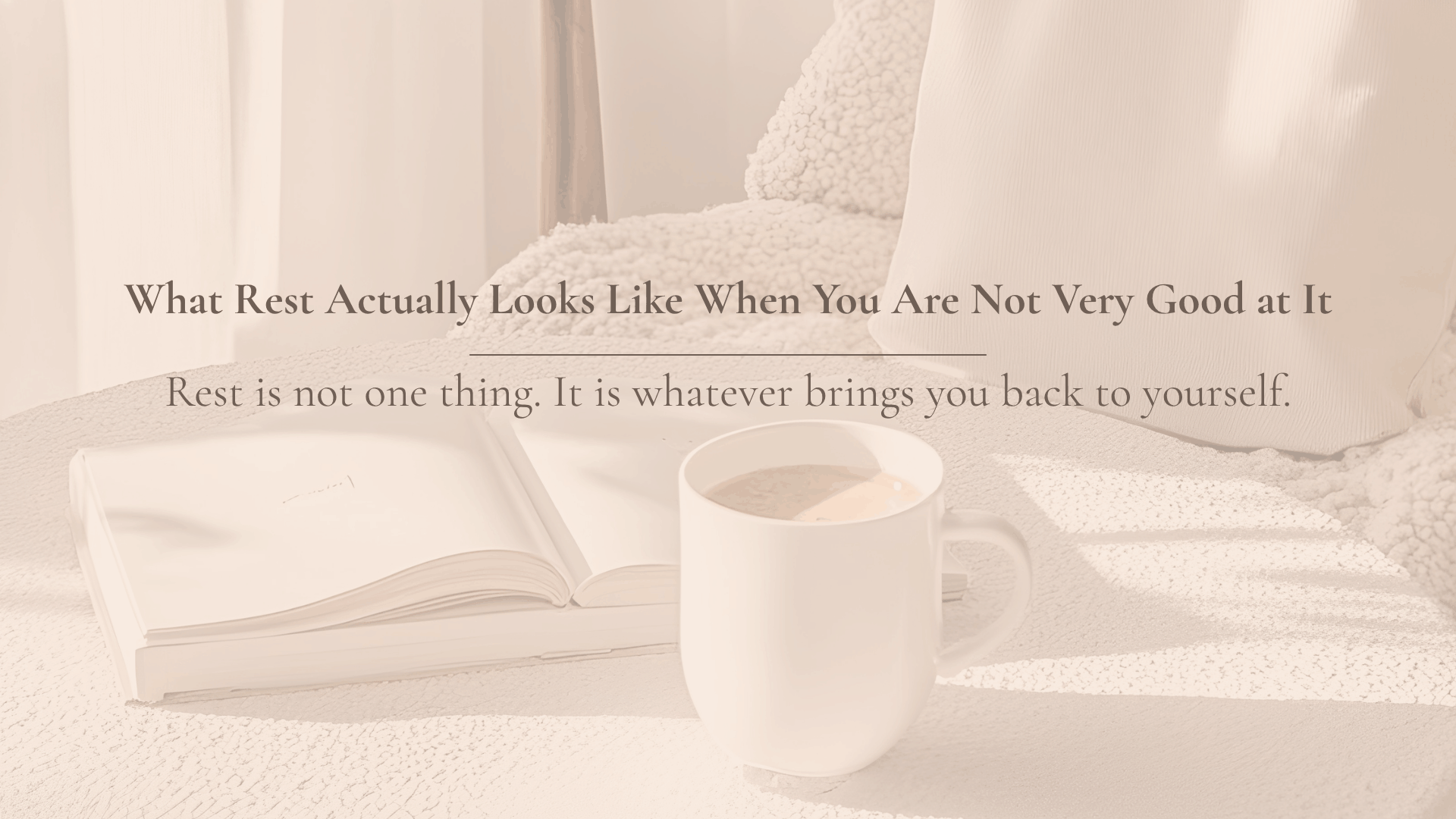
The truth is that rest is not one fixed thing. It is not a single state you either achieve or fail to reach. It is a spectrum, and your version of it is allowed to look different from someone else’s.
Why some people genuinely struggle to rest
For people who find rest difficult, it is rarely laziness or indifference. Usually it is the opposite.
High sensitivity to the needs of others makes it hard to stop when there is still something that could be done. A mind that is naturally active makes stillness feel uncomfortable rather than restorative. A long habit of tying worth to output makes stopping feel like falling behind.
Some people also carry an underlying belief that if they stop, something will go wrong. That they are the thing holding everything together, and rest is a risk they cannot quite afford.
None of this means rest is impossible for these people. It means the kind of rest they need might look different to the standard image, and that is worth knowing.
Rest is not always stillness
For some people, stillness is the most restorative thing. Silence, a nap, an hour with no plans and no phone. That is real rest and it counts completely.
For others, stillness is actually activating. The quiet makes the noise inside louder. Lying down without a purpose makes the mind race rather than settle.
If that is you, rest might look like something that absorbs your attention gently without demanding anything of you. A walk without a destination. A creative thing you do purely for yourself with no output in mind. A film you have seen before so there is no effort of following something new. A conversation with someone who makes you feel easy rather than performed.
The question is not whether what you are doing matches the conventional image of rest. The question is whether it is giving something back to you rather than taking something from you.
What rest actually asks of you
Part of why rest feels hard is that it requires you to stop performing.
When you are busy, you are doing. You are visible. You are useful. There is output that proves your presence and your value. Rest does not produce anything. It does not look like progress. It sits quietly and asks you to be okay with that, even just for a while.
For a lot of people, that is the real difficulty. Not the stopping itself. But what the stopping asks you to sit with.
Rest can surface things. Thoughts that have been waiting for a gap. Feelings that were easier to avoid when you were moving quickly. The particular quietness that arrives when you are no longer distracted from yourself.
That can feel uncomfortable. But that discomfort is not a reason to avoid rest. It is often a sign that rest is doing something important.
The difference between escape and restoration
Not everything that looks like rest actually is.
Scrolling for an hour can feel like switching off. So can staying very busy with low-stakes tasks that keep you from sitting with something uncomfortable. So can drinking more than you intended, or staying up too late, or filling every gap with noise.
Those things are understandable. They are often what exhausted people reach for. They are not the same as restoration.
The difference is usually felt the next day. Restoration tends to leave you with a small but real sense of having topped something up. Escape tends to leave you in the same place you started, or slightly worse.
There is no shame in the escape sometimes. The point is just to notice the difference, and to try to make room for actual restoration when you can.
Small rest is still rest
One of the things that makes rest feel impossible for busy people is the belief that it needs a significant block of time to count.
But rest accumulates in smaller moments too. Ten minutes outside. A meal eaten without a screen. A short pause between tasks where you actually pause rather than immediately picking up your phone. A moment of doing one thing at a time.
These are not grand gestures. They are not going to fix burnout on their own. They do, however, add up. And they are available in most days in a way that a long bath or an empty afternoon is not.
If you are waiting for a proper window of time to finally rest, you may be waiting longer than you need to. The smaller version is worth taking in the meantime.
Finding what actually works for you
It is worth spending some time noticing, genuinely and honestly, what leaves you feeling better rather than just different.
Not what you think should work. Not what works for someone else. Not the version that looks most like the image of rest you have been sold. What actually works for you, in your life, with your particular kind of tiredness.
That might take some experimenting. It might mean trying things that feel counterintuitive. It might mean unlearning the idea that rest has to be earned, or be silent, or take a particular shape.
Your version of rest is valid even if it does not look like anyone else’s. The only test that matters is whether it gives something back to you.
Closing thought
If you have been struggling to rest because you cannot seem to do it the way you think you are supposed to, it might be worth letting go of the supposed to entirely.
Rest is not a performance. It is not something you get right or wrong. It is just whatever brings you back to yourself a little more than you were before.
Start there. The rest, if you will, will follow.
There is more like it over on Instagram at @dailypositivitygems.